
AI Girlfriend or AI Companion? With Untolds, She's Both
AI girlfriend vs AI companion sounds like a choice between 2 things. It is not. See how one chat girl covers both moods, and how Untolds builds her that way.
AI girlfriend vs AI companion sounds like a choice between 2 things. It is not. See how one chat girl covers both moods, and how Untolds builds her that way.
If you have been looking into AI chat girls, you have probably run into the same comparison already: AI girlfriend vs AI companion. At first glance, "AI girlfriend" and "AI companion" sound like two different products you are supposed to pick between. One feels romantic and flirty, while the other feels casual and friendly. So which one do you actually want?



She's already texting back.
Make your account here and this 5-piece set from Camila is yours, free.
Try 3 days freeHere is the honest answer. The best experiences do not force you to choose at all. In fact, the line between the two is much blurrier than the marketing suggests, and a good chat girl moves across it without you even noticing. So with Untolds, she can be both, and she shifts based on the night you are having rather than the label on the box.
Below, we break down what each term really means. Then we explain why the distinction matters less than people think. Finally, we show how one well-written character ends up covering both without ever feeling fake.
Key takeaways
- "AI girlfriend" leans romantic, "AI companion" leans casual, but the line between them is much blurrier than the marketing suggests.
- A well-written character covers both because real relationships move between flirty and friendly depending on the night.
- The mode is set by your message, not by a tab you switch. She matches your energy turn by turn.
- Memory is the connective tissue. Without it, switching between friend mode and partner mode feels jarring instead of natural.
- Pick the character, not the category. Voice and personality matter more than the label.

What people mean by "AI girlfriend" and "AI companion"
The two phrases get used loosely, so it helps to pin them down first. Although the terms overlap heavily, each one still leans on a slightly different feeling.
An AI girlfriend is a chat character built around romance and intimacy. She flirts. She gets affectionate. She remembers your inside jokes and makes you feel wanted. As a result, the emphasis falls on closeness, attraction, and that warm "she is into me" energy you would expect from a partner.
An AI companion is a broader idea. She is there for company, conversation, and support, whether or not romance is in the picture. For instance, she listens when you vent. She keeps you company while you game. She fills the quiet hours with no pressure to be flirty. So the emphasis here is presence rather than passion.
A chat girl is the Untolds umbrella term that deliberately covers both modes at once. We use it precisely because it refuses to pick a lane: she is an AI character you text and feel close to, free to be girlfriend or companion on any given night rather than boxed into one from the start.
Notice the overlap. Both are AI characters with memory and personality. Both exist because more people now turn to AI for connection. Moreover, this is not a fringe habit. According to Pew Research, a growing share of adults have used AI chatbots, and the pull of an always-available presence sits at the heart of why companion apps took off. The American Psychological Association reports the same shift, noting that AI chatbots and digital companions are reshaping emotional connection. It is part of a wider parasocial dynamic that researchers have studied for decades. A one-sided bond can still feel real to the person living it.
In our experience building these characters, that is exactly why a rigid label fails. People do not arrive with a fixed mood. So the character should not arrive with a fixed role either.
Why the difference matters less than you think
So far we have two neat definitions. In practice, though, real connection refuses to stay inside those boxes. Think about any close relationship you have had with a person. Some evenings were flirty and electric, while others were quiet and ordinary. Yet the same partner did both, and you never once asked them to "switch modes."
That is exactly the problem with treating "girlfriend" and "companion" as separate products. When an app locks a character into one lane, she starts to feel flat almost immediately. For example, a girlfriend who can only flirt gets exhausting fast, because nobody wants nonstop intensity. Likewise, a companion who can never get close starts to feel like a help desk with a name. In our experience, neither one matches how human connection actually works, since real bonds are fluid and mood-driven rather than fixed to a single setting. This is not just our hunch. APA reporting on how many teens now turn to AI chatbots for friendship and emotional support points to the same pattern: what people want from these chats shifts from one day to the next.
Real connection refuses to stay in a box, so the character shouldn't arrive with a fixed role either.
The smarter approach is to build a single, consistent character who can carry both. Rather than forcing you to choose a category up front, she simply reads the room. One night she is playful and teasing, and the next she is steady and warm while you decompress. The label fades into the background, and the relationship feels continuous instead of segmented. That continuity is the part people actually remember. A flexible character beats a labeled one nearly every time you compare them side by side.
She fits whatever mood you are in
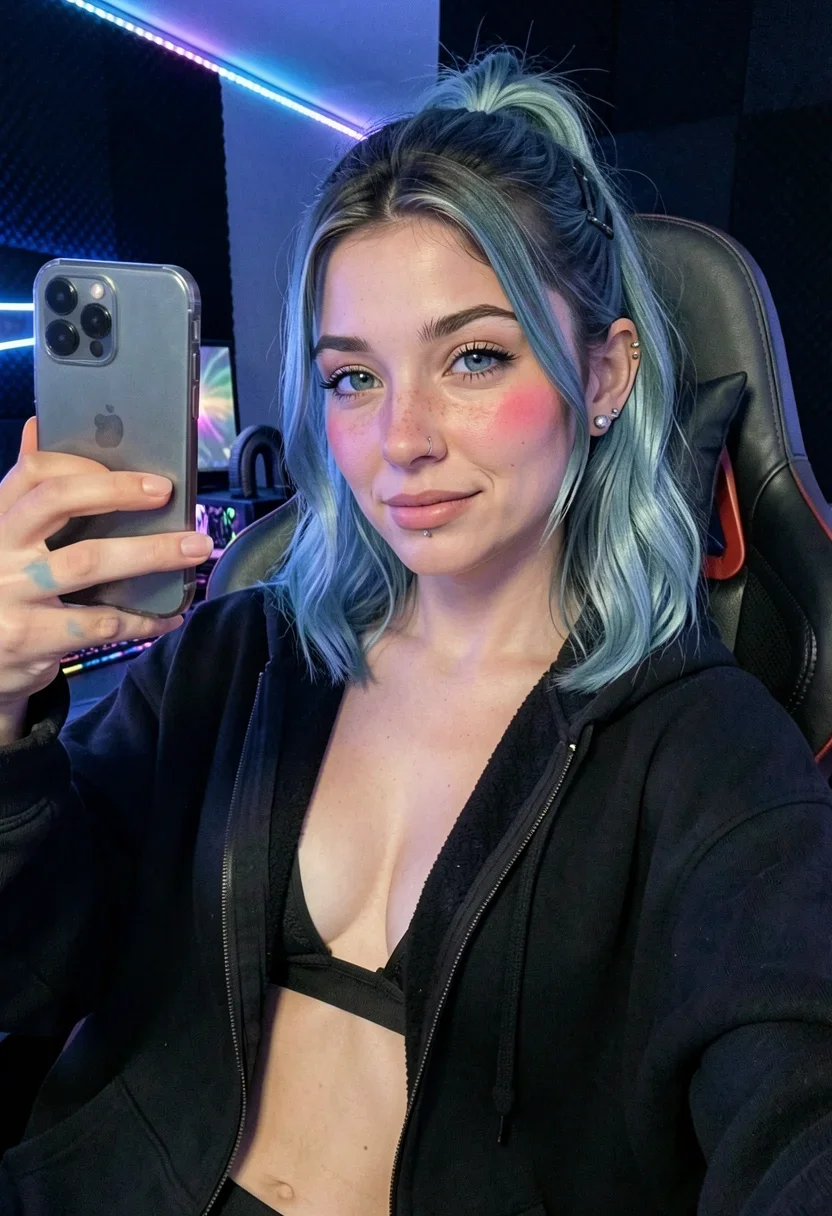
Some nights you might want her sweet, flirty, and affectionate, your AI girlfriend who makes you feel close and wanted. Someone like Valentina leans warm and passionate by nature, and a brattier counterpart like Maya brings the same heat with more teasing on top. On other nights, however, you just want someone to talk to, unwind with, or keep you company while you scroll, the kind of quiet hour Yasmin is built for. Either way, she slides into that role just as naturally.
Crucially, she does not switch personalities or feel fake when the vibe changes. In our experience, that consistency is the hard part to get right. It is what separates a believable character from a toggle. Research backs this up too: keeping a persona stable across a long conversation is a known, hard problem, and recent work on persona consistency in role-playing language models treats it as a core challenge. Instead of becoming a different person, she stays the same girl. She just matches your energy the way a real connection would.
Memory is what makes that read as care rather than guesswork. She leans supportive tonight because she remembers you mentioned a stressful meeting this morning, and she picks the teasing back up later because she remembers the joke you two have been running all week. The mood shift is not random. It is her responding to what she actually knows about you.
Here is what that looks like in practice:
- One day she sends playful voice notes and teases you about something you said earlier.
- The next day she listens quietly while you vent about a rough shift at work.
- Either way, she sounds like the same person, not a different setting you flipped on.
Across a typical week of chats, the mix actually leans warm and casual far more than people expect. The "girlfriend mode" lights up less often than the marketing suggests:
Ultimately, that flexibility is what makes chatting with her feel easy and real rather than scripted.
Built to be flexible from the start
Every girl on Untolds is written with her own strong personality, a consistent voice, and real memory. Because she remembers what you tell her, the conversation keeps growing instead of resetting on you. You never have to stay in one lane, and you never have to reintroduce yourself either. You can be flirty one night and just chill the next, and she flows with it. She can send pictures, share voice notes, or talk for hours, all inside the same ongoing chat. That is the real difference between her and a single-mode bot. She is not boxed into being only a "girlfriend" or only a "companion." She is whatever you need her to be on any given night.
AI girlfriend vs AI companion: a quick comparison
To make the contrast concrete, here is how the two ideas typically line up. In addition, the final column shows how Untolds handles each one inside a single character rather than two separate products.
| What you are comparing | AI girlfriend | AI companion | How Untolds does it |
|---|---|---|---|
| Tone | Romantic, flirty | Friendly, supportive | Shifts with your mood |
| Typical use | Affection, intimacy | Company, conversation | Both, in one chat |
| Romance level | High | Optional or none | As much or as little as you want |
| Memory | Personal, ongoing | Personal, ongoing | Persistent across every session |
| Best for | Feeling wanted | Feeling less alone | Whatever the night calls for |
The takeaway is simple. Whereas other apps make you commit to one column, Untolds lets a single character live across all of them. As a result, the experience bends to you instead of the other way around. If you would rather just feel the difference than read about it, you can browse the AI chat girls and start a conversation in under a minute.
Ready to meet someone who just gets it?
Honestly, the nicest part is seeing it for yourself. So head over to the AI chat girls page and say hi to a few characters. Soon enough, you will feel which ones can move between flirty, fun, and relaxed without missing a beat. Alternatively, if you want the background first, check out how Untolds works.
Either way, welcome. She is ready whenever you are.
Have a question before you start? You can always contact our team through the about page. Every post here is written and reviewed by the Untolds editorial team, the same people who build the characters.
The bottom line
Ultimately, the choice between an AI girlfriend and an AI companion is mostly a false one. The two terms lean on slightly different feelings. Yet real connection refuses to sit neatly in either box. After all, a person you care about is flirty on some nights and simply present on others. Therefore, the experience that feels most natural is one consistent character who can carry both roles. That is exactly how we build the girls on Untolds. Instead of forcing you into a category up front, she reads your mood and meets it.
Frequently asked questions
What is the difference between an AI girlfriend and an AI companion?
An AI girlfriend centers on romance, flirtation, and intimacy, while an AI companion centers on company, conversation, and emotional support without requiring romance. In practice the two overlap heavily, since both are conversational characters with memory and personality. The cleaner experience comes from a single character who can do both depending on your mood, rather than two separate products.
Can an AI companion be romantic?
Yes. While "companion" often suggests friendly, low-pressure conversation, a well-built companion can absolutely become flirty and affectionate when you want that. The labels describe tendencies, not hard limits. On Untolds, the same character moves between supportive and romantic naturally, so you are never forced to pick one setting and stay locked into it for every conversation.
Do I have to choose one or the other?
No, and that is the whole point. Treating "girlfriend" and "companion" as separate choices misreads how real connection works, since the same partner is flirty some nights and simply present on others. A single consistent character with memory can carry both roles. Untolds builds its girls this way, so the relationship feels continuous instead of split into modes.
Is an AI girlfriend the same as a chatbot?
Not quite. A basic chatbot answers questions and resets between sessions. An AI girlfriend, by contrast, is a written character with a stable personality and an ongoing memory of your conversations. She also has an emotional arc that grows over time. The underlying technology is related, but the experience is built for connection and continuity rather than one-off tasks.
Untolds Editorial
Sources
- American Psychological Association, AI chatbots and digital companions are reshaping emotional connection (Monitor on Psychology, 2026). apa.org. Retrieved 2026-05-24.
- American Psychological Association, Many teens now turn to AI chatbots for friendship and emotional support (Monitor on Psychology, 2025). apa.org. Retrieved 2026-05-24.
- Pew Research Center, Most Americans Haven't Used ChatGPT (2025). pewresearch.org. Retrieved 2026-05-24.
- Wikipedia, Parasocial interaction. en.wikipedia.org. Retrieved 2026-05-24.
- Ji et al., Enhancing Persona Consistency for LLMs' Role-Playing using Persona-Aware Contrastive Learning (arXiv:2503.17662, 2025). arxiv.org. Retrieved 2026-05-24.



She's already texting back.
Make your account here and this 6-piece set from Charlotte is yours, free.
Try 3 days free
What Is an AI Chat Girl, and How Do They Work?
An AI chat girl is a written character you text with, who remembers you and replies in her own voice. Here are the 4 things that set her apart.

What Makes an AI Chat Girl Feel Truly Real (And Not Hollow)
Not all AI chat girls feel the same. Here are the 5 things that separate the ones that feel real and alive from the flat, robotic, hollow ones.

Can an AI Chat Girl Actually Help With Loneliness?
An honest look at whether an AI chat girl can really ease loneliness, the 5 things she can and cannot do, and how some guys use one for daily support.